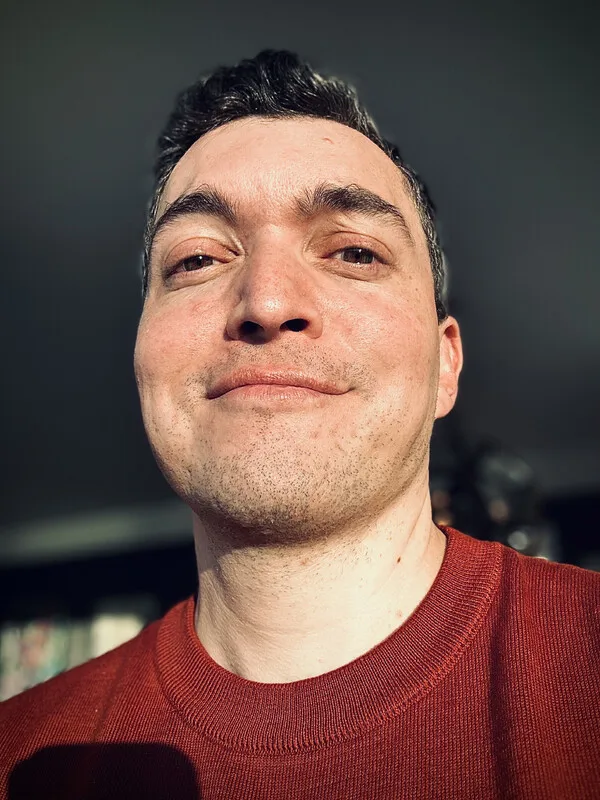
What initially drew you to screenwriting, and what keeps you passionate about the craft?
I first tried screenwriting on a dare in August 2023. Before that, I had spent 22 years as a corporate attorney in Manhattan, sure that this would be my career for life.
That night in East Hampton, I got into a heated debate with my best friend about AI and how it might affect our sense of individuality, goodness, and free will. My friend believed we were headed for a future where people would lose their personalities and moral direction. I argued that people are resilient and have always found ways to get through tough times. To make my point, I said that even if AI caused an apocalypse, and everyone—including a group like The Breakfast Club, stuck in the worst jobs at Amazon in suburban Omaha—had to live through it, they would still find a way to do the right thing. I was so sure of my argument that I opened my iPhone's Notes app for the first time to write down my story and share it at breakfast. The next morning, the other guests agreed with me and thought the story was hilarious. They encouraged me to turn it into a movie. Ten weeks later, I finished my first screenplay. Three years and eighteen drafts after that, it is now being made into a major motion picture. I just finished my sixth screenplay and am excited to have found a new creative path.
Can you walk us through your creative process when developing a screenplay?
Every screenplay starts as a simple idea: a memory, an overheard phrase, or a song lyric—something that forms images in my mind and asks, "What if this happened?"
I usually pause and let the thought continue. If it forms a story, I jot it in my Notes app. Later, if the story lingers, I revisit it with fresh eyes. If it brings me joy, I know it is my next screenplay—the story will not let me go.
Where do you find inspiration for your stories, and how do you decide which ideas to pursue?
Where I Find Inspiration (And Why I Only Write About What Refuses to Break)
The night was filled with worry as the RIA owner sat alone in his faintly illuminated office, surrounded by financial statements and legal documents. His business was close to collapsing. The easy option was clear: file for Chapter 11 bankruptcy, let his loyal staff go, and start over. But when he looked at the pictures of his employees, their families, and their dreams, he realized there was only one choice he could live with. The decision he made that night was not about saving himself; it centered on safeguarding those who had supported him. These represent the times when my stories are fueled, when humanity endures even as everything else falls apart. Acts like these inspire every story I tell.
The truth is more mundane and more devastating:
I find inspiration in the ethical questions that come up when we ask: What do we owe each other when the rules break down? My stories begin in the space between what systems expect and what people refuse to become.
After twenty-four years practicing law, seeing systems fail, regulations fall apart, and structures wear people down, I've noticed the same pattern again and again:
When the system breaks, most people don't break with it.
They should. Game theory says they should. Self-interest says they should.
But they don't.
And that gap, between what people should do to survive and what they actually do to stay human, is where all stories reside.
THE LEGAL PRACTICE AS A WITNESS STAND
Allow me show you what I mean with actual cases.
The Bankruptcy That Wasn't
Client: Small RIA, 15 employees, struggling after compliance violations triggered client exodus.
The math: File Chapter 11, discharge debts, lay off staff, emerge lean.
What he did: Liquidated everything. Paid employees through the end. Lost his house. Started over.
"My assistant has a kid with medical needs. My analyst just bought a house. These people showed up for me. Every day. For years."
The system said: Protect yourself.
He said: Protect my people.
His heart beat rapidly as he considered his options. The fear of losing everything he had built over the years was overwhelming. What if his decision led to financial ruin, not just for him, but for those he cared about? He experienced a sudden ache of doubt. Could he make it through what came next?
That's not a business decision. That's a human decision.
When I'm facing an empty page trying to figure out what story to tell, I think about him. About the choice he made when no one would have blamed him for making the other one.
That's inspiration.
The Whistleblower Who Stayed
The compliance officer discovered that principals were misrepresenting performance to investors. Reported to the SEC. Lost her job. Spent two years unemployed during the investigation.
I asked her: "Was it worth it?"
"I have a daughter. I want her to know what her mother did when it mattered."
The system said: Look away.
She said: I can't.
When I write characters who risk everything to tell the truth—I'm writing her. Not because it's inspirational. Because it's documented.
The Brother Who Wouldn't Let Go
Carlos, 19 years old, is working two jobs to get guardianship of his 13-year-old brother after their mother was killed.
The system said, "Foster care is safer." You don't have the resources.
He said: He's my brother. I'm not losing him.
And he won. Not because the system worked, but because he refused to accept what the system said was inevitable.
THE PATTERN
Humans are not built just for self-interest. We are built for each other. While economic theories frequently focus on rational self-interest, research on pro-social behavior shows a more complex reality: people are wired to care about others, even when it goes against their own gain. This natural tendency to look out for others supports my point and enhances the complexity of the stories I want to tell.
The RIA owner chooses his employees over personal gain.
The whistleblower chooses principle over personal security.
The brother chooses family over the prescribed path.
Over and over.
Most people, when faced with a choice between self-interest and protecting others, choose the latter.
Not always. But far more often than the system accounts for.
The space between what systems expect and what people actually do is where narratives unfold. Think about your own workplace. Have you seen times when expectations clash with people's determination? Ask yourself: where in your job does the gap between what the system wants and how people respond reveal a narrative worth telling?
HOW I DECIDE WHICH IDEAS TO PURSUE
I don't chase ideas. I focus on the gap.
My filter for every story:
Does this show a system failing?
I'm here to document what happens when they don't work.
Does this show humans enduring anyway?
When systems fail, humans mostly try to catch each other. I'm interested in that. Only that.
Is there a choice that reveals character?
The ones that cost everything and gain nothing except the ability to live with yourself—that's what I'm hunting for.
Does this make me angry about what we accept as inevitable?
Every story starts with rage:
GOOD: Workers pissing in bottles as "the cost of efficiency."
Mr. Smith: Corruption as "how politics works."
All Downhill: Families ripped apart by systems claiming to help
Is there someone trying anyway?
In GOOD, AI is eating civilization. But warehouse workers still share food among themselves.
In Mr. Smith, the Senate is captured. But one prosecutor still tries to do the job right.
In All Downhill, families are colliding. But they keep showing up to dinner.
Systems fail. People keep going. These acts of fortitude are not just admirable; they can lead to real change. When someone chooses to help others rather than look out for themselves, as the RIA owner did by putting his employees first, it can motivate others to act with kindness and support in their own lives. This is how one act of courage can lead to a bigger movement of promise.
That's the only story I know how to tell.
WHY I ONLY WRITE REGARDING RESILIENCE
Writing about humanity's better nature isn't optimism. It's testimony.
The RIA owner? Real.
The whistleblower? Real.
The brother? Real.
These aren't fables. These are case files.
When I turn them into fiction—the warehouse worker who shares her lunch, the prosecutor who won't take the deal, the family that shows up despite everything—I'm not inventing human decency.
I'm documenting it.
We live in a culture that often expects the worst. It says people are selfish, systems are unfair, and there's no point in trying. But what if we made a different choice? What if we saw this cynicism as a reason to act, not to give up? By joining forces and focusing on our common strengths, we can change this story. Each person's act of fortitude can help build a bigger picture of hope and change. This is an invitation to join the conversation, to work together, and to help establish a future where kindness and unity matter.
My legal practice is a twenty-two-year rebuttal.
I see clients who could cut corners but don't.
Whistleblowers who could stay quiet but don't.
Families who could walk away but don't.
And if I don't write about them, who will?
THE INSPIRATION THAT NEVER RUNS OUT
People worry about running out of ideas.
I've never had that problem.
Every day, my legal practice hands me another story:
Another client is making a harder choice.
Another person refusing to become what the system demands.
Another human choosing decency when survival would be easier.
The well doesn't run dry because humans don't stop being human.
Even under intense pressure. Even when the system punishes them for it.
They try anyway.
Where do I find inspiration?
In the gap between what systems demand and what humans refuse to become.
How do I decide which ideas to pursue?
I pursue the ones that document what we protect when protection isn't guaranteed.
I seek the ones where someone tries against the odds.
I pursue the ones that testify to what I see every day:
When everything falls apart, most people try to catch each other.
Not because they're saints. Not because they don't understand the cost.
Because they're human. We're wired for each other.
The system doesn't account for this. Economics doesn't predict it.
But it happens. Constantly. Documentably.
And someone needs to write it down.
Time is running out. We can't afford to pretend people are worse than they are. Instead, let's document what humans actually do when structures fail: they try to catch each other. Let's unite in this mission and transform urgency into a collective purpose that preserves what genuinely counts.
They try to catch each other.
That's not naive.
That's the data.
That's the story I have to tell, because if we don't record what matters, we might lose it.
What has been the most rewarding project you've worked on so far, and why?
The most rewarding project I've ever worked on is The Parables, a four-part anthology covering 5,000 years of human history—a project that almost didn't happen. Imagine it's 2 a.m., the world is quiet and dark, and my desk is buried under legal briefs and script notes. I'm staring at a blank page, exhausted, trying to find the idea that could capture what it means to be human across time. In those late hours, it felt like only boldness kept me going.
It wasn't because the idea was bad, but because it was so bold it seemed almost impossible. I remember pitching it to a potential investor. As I explained the concept, the room went quiet. The lead producer leaned back and said, "You're asking us to invest in a project that spans millennia and genres? It's commendable—or simply mad." Others shared his skepticism, and the meeting became a test of my determination. Four feature films. Four genres. Four time periods. Four locations. Each film follows the same souls, reincarnated through history, facing challenges from ancient times to the rise and near-destruction by AI.
But here we are: the four scripts have won over 200 international awards. GOOD is already in production, there's interest in the others, and the whole journey is documented at www.theparables.net.
Why was this the most rewarding project?
Taking on this challenge—impossible, irrational, and career-defining—taught me everything I know about storytelling, myself, and how people act when systems break down. At its heart, this project was about proving something simple: our better nature isn't just shaped by circumstances, it's part of who we are. When systems fail, we choose each other. That's proof of our resilience and our ability to keep going.
THE CHALLENGE: FOUR FILMS, ONE ETERNAL TRUTH
Let me explain what I set out to do, and why so many people thought I was out of my mind.
The Structure:
Volume 1: GOOD (2028 / Sci-Fi Thriller)
Location: Omaha warehouse, Earth orbitGenre: AI apocalypse
Question: When efficiency demands mechanization, what will humans protect?
The proof: Warehouse workers who choose to share food despite algorithmic pressure to compete.e
Volume 2: MECCA (2001 / Drama)Location: Post-9/11 New York City
Genre: Social drama. Question: When fear insists on division, what will individuals choose?
The proof: A cab driver chooses protection over suspicion, showcasing a triumph over fear.
Volume 3: HI (Parts 1 & 2) (2007-2048 / Gothic Horror/Dystopian Thriller)
Location: North Carolina mansion, post-apocalypse New YorkGenre: Supernatural horror becoming a political thriller
Question: When corruption spans generations, what remains of humanity?
The proof: Souls reconnecting and staying true to humanity, despite oppressive systems.
The connection:
The same core souls—Eva, Lily, Robert, Leo, John, and Eli—appear in each film, living new lives and identities across the centuries. Each time, they face different challenges connected to humanity's struggle.
These recurring souls are reincarnated in each era, always facing new pressures. Each time, they are tested by systems—whether technological, social, political, or supernatural—that challenge their humanity and force them to make crucial choices. The argument threading through all four:
As I walked past the bustling market one day, a small act caught my attention and resonated with the core of this project. A street vendor, faced with tough competition and dwindling sales, chose to give extra produce to a struggling family rather than turn them away. It was a true testament to choosing compassion over personal gain, showcasing that even amidst adversity, some choose the path of human kindness and empathy.
Why this was insane:
1. The scope was absurd
Four feature-length scripts. That's 400+ pages of screenplay over four completely different stories that somehow had to feel cohesive.
Most writers struggle to finish one feature. I wrote four in three years while running a full-time law practice.
2. The research was crushing
2028 AI development and warehouse automation for GOOD
Post-9/11 New York, Muslim American experiences, consulting culture for MECCA
North Carolina Gothic architecture, generational wealth, supernatural folklore, climate collapse modeling, post-apocalypse Manhattan infrastructure for HI
I had to become an expert in fields far from law.
3. The genre shifts were brutal
Sci-fi thriller about AI? Hard. Social drama about fear and Islamophobia? Hard. Gothic horror turned dystopian thriller? Nearly impossible.
Writing a social drama about Islamophobia? Hard.
Writing a Gothic horror that becomes a dystopian political thriller spanning 40 years? Nearly impossible.
Trying to blend all these elements together almost broke me more than once. Each time, I felt close to giving up, doubting whether I could keep going. At one low point, overwhelmed by the genre shifts and complex story, I seriously considered quitting. But I took a deep breath and decided to keep going, believing in the story's potential. That choice to persist became a real example of resilience—the same perseverance that The Parables is all about.
4. The reincarnation structure was a minefield
How do you show the same souls across four films without heavy-handed explanation or losing the audience?
How do you make Eva in GOOD feel connected to Eva in HI 20 years later without literally saying "this is the same person reincarnated"?
5. The industry logic screamed NO
"Nobody greenlights anthologies."
"Nobody funds four films from an unknown."
"This interconnection is too complicated—audiences won't track it."
"Write one good script first, THEN worry about a sequel."
I ignored all of that advice. The challenge was the point.
WHY I DID IT ANYWAY
Because after twenty-two years of legal practice, watching systems collapse, and humans endure, I realized:
You can't prove a pattern with one data point.
One film about warehouse workers staying human during an AI apocalypse? That's a story.
But four films showing souls choosing humanity over 5,000 years, even as systems try to break them? That's real testimony. And that's what I needed to create. My legal practice kept showing me this pattern:
As I sat in the courtroom one rainy morning, representing a small-business owner fighting to keep his family's livelihood alive, I witnessed a determination that echoed the resilience I sought to capture in The Parables. The business owner, much like the souls in my films, chose community over personal gain, demonstrating a profound instinct to protect and preserve human connections amidst adversity.
The RIA owner losing his house to pay employees—that wasn't an exception. That was the pattern.
The RIA owner losing his house to pay employees—that wasn't an exception. That was the pattern.
The whistleblower sacrificing her career—that wasn't rare. That was documented behavior.
The brother working two jobs for guardianship—that wasn't heroic. That was what humans do.
And if I only told one of those stories, people could dismiss it as an outlier. As an exception. As "that's nice, but that's not how the world really works."
But four films? Four different catastrophes? Four different time periods? Four different systems collapsing?
And the same souls making the same choice to stay human?
That's not inspiration porn. That's evidence.
WHAT IT ACTUALLY TAUGHT ME
Lesson 1: Genre Is a Vehicle, Not a Destination
Before The Parables, I thought I had to pick a lane. "I'm a thriller writer" or "I'm a drama writer."
After the Parables: Genre is just the delivery system for the argument.
GOOD needed sci-fi because AI collapse makes the dehumanization literal
MECCA needed social drama because post-9/11 Islamophobia required emotional authenticity
HI needed Gothic horror becoming a dystopian thriller because generational evil and its ultimate defeat needed that tonal journey. The genre isn't the story. The real story is the human choice under impossible pressure. Sometimes, small details make that pressure real: the noise of Manhattan, the rough feel of old taxi seats, and the smell of street pretzels in Amaan's cab, pulling readers into the moment with him. him.
Once I understood that, every genre became available to me. I wasn't constrained anymore.
Lesson 2: Research Creates Authenticity, Authenticity Creates Connection
The research for The Parables nearly killed me.
For MECCA, I interviewed Pakistani Muslims who lived in New York during 2001-2003. I read hundreds of first-person accounts. I studied consulting firm cultures. I researched NYPD surveillance programs.
And here's what happened:
The research didn't just inform the world. It created the character.
Amaan isn't a generic "Muslim experiencing discrimination" character. He's specifically a Pakistani-American consultant who code-switches between cultural identities, who's been told his whole life that hard work and assimilation will protect him, who discovers that no amount of success makes him safe when fear takes over.
That specificity came from research. And that specificity is what makes him real.
Lesson 3: Connection Requires Pattern, Not Explanation
The biggest risk in The Parables was making the reincarnation link too obvious. I didn't use exposition or have characters realize they'd met before. I didn't explain the metaphysics. Instead, I showed the pattern: Eva shares food with a coworker in GOOD, Robert protects a stranger in MECCA, and Lily searches for her stolen daughter in HI. What connects them is a simple red string bracelet each character wears—a quiet sign of their shared soul and journey. Same soul, same choice, different disaster. The audience senses the pattern before they fully understand it, and that feeling is more powerful than any explanation.
This taught me: Trust the structure. Trust the audience. Trust the pattern.
Lesson 4: Taking on the Impossible Validates the Ambition
Here's what happened when I started submitting The Parables:
Early response: "This is too ambitious. Too complicated. Focus on one."
After GOOD won 50+ awards: "What else do you have in this world?"
After MECCA and HI started placing, "Can we see the whole anthology?"
After production started on GOOD: "This four-film structure is brilliant. How did you know it would work?"
I remember meeting a skeptical producer early on. He sat across from me, arms crossed, clearly doubtful as I pitched the huge scope of The Parables. He asked, "Why not stick to one film that has a better chance of success?" Months later, after GOOD started winning awards, I was invited back. This time, he was curious. "So, how did you connect these stories and keep them cohesive?" he asked, now showing respect for what once seemed impossible. That moment showed me how ambition, backed by perseverance, can earn credibility.
Taking on something this big showed I was serious, willing to do the work, and had a clear vision.
When you follow through on ambition, it speaks for itself.
WHY THIS WAS REWARDING (THE REAL ANSWER)
Most writers say their most rewarding project was the one that succeeded commercially. The sale. The acclaim. The validation.
That's not why The Parables is my answer.
The Parables is rewarding because it proved I could document what I'd been witnessing for twenty-two years.
What The Parables Actually Document:
In GOOD: When AI tries to replace humans, humans refuse to replace each other. Eva saves the world not through heroics but through a password: "criss cross applesauce"—John's daughter's jumprope rhyme. What persists isn't efficiency. It's memory. It's love.
In MECCA: When fear demands Muslims be seen as a threat, a Pakistani cab driver and a gay white consultant choose to see each other as human. When the system says suspect, humans say protect.
In HI: When a Gothic horror of stolen children and generational evil spans 40 years, the stolen daughter (Lily's child, now Grace) becomes President and stops the next AI apocalypse. What generational evil steals, generational resilience reclaims.
The Pattern Across All Four:
Systems collapse. Humans choose each other anyway.
Not because it's smart. Not because it's rewarded. Because that's what humans are optimized for.
And The Parables—taking on this insane four-film challenge—let me prove that pattern across catastrophes.
One film could be dismissed as optimistic fiction.
Four films become documentary evidence.
WHAT I LEARNED ABOUT MYSELF AS A STORYTELLER
I'm not a genre writer. I'm not an AI writer, a social drama writer, or a horror writer.
I'm a systems writer who documents what humans protect when systems fail.
The Parables let me explore that question across every type of collapse:
Technological (AI in GOOD)
Social (Islamophobia in MECCA)
Generational/Environmental (Gothic evil and climate collapse in HI)
And the answer is always the same:
We try to stay human. Imperfectly. Inconsistently. But persistently.
THE REWARD THAT MATTERS
The Parables have won 200+ awards. One's in production. The others are generating serious interest.
But that's not the real reward.
The reward is this:
I proved I could build something impossible and make it undeniable.
Four films. Four genres. Four catastrophes. One eternal truth about humanity's resilience.
Nobody asked for it. Nobody thought it would work. Nobody believed I could execute it while running a law practice.
And I did it anyway.
Because that's what The Parables is actually teaching:
When the system says it's impossible, someone tries anyway.
The warehouse worker shares food when algorithms say compete.
The cab driver protects a stranger when fear says suspect.
The stolen daughter is becoming president and stopping the AI she was born to fight.
And the writer is creating four films, even though logic says write one.
Screenwriting can be a tough industry - how do you handle challenges and setbacks?
Resilience, with a dash of defiance. I know that setbacks will come, so I come prepared. Financially, I still practice law, so that I can weather the rough patches. And mentally, I know that every setback is an opportunity to learn.
In your experience, what makes a screenplay truly stand out to industry professionals?
Authenticity, commercial appeal, and personal preference.
Are there any particular themes or messages you always strive to include in your work?
The everlasting resilience of humanity's better nature.
How do you see the future of storytelling evolving, and what excites you most about it?
It is getting faster, more bold, and more varied. What excites me is that this means more content will be available, and artists will feel liberated to expand their comfort zones to explore new territory.
What advice would you give to aspiring screenwriters looking to break into the industry?
Don't be timid. If you truly believe you have a talent for this art, and know that it brings you more joy than what you are doing now, then all you gain by waiting is more regret that you didn't try sooner.
What's next for you? Are there any upcoming projects or goals you're excited about?
Over the holidays, I completed my interpretation of the 1939 Capra classic, Mr. Smith Goes to Washington, updated as a modern political thriller, as well as All Downhill From Here, a comedic drama about a blended family on a Vermont ski trip suddenly exposed to a unexpected dog, surprise pregnancy, and an avalanche of family secrets revealed.